
— 01
Land Consolidation
Fragmented smallholder plots across Buuri, Tigania, and Igembe sub-counties aggregated into Economic Production Units under long-term leases — the industrial moat that unlocks scale.

UMO Finnest Limited consolidates fragmented highland plots into high-efficiency Economic Production Units — bridging smallholder tradition and global industrial standards.
A consolidated management strategy that turns highland potato farming into a globally competitive, traceable, food-safe operation.
Fragmented smallholder plots across Buuri, Tigania, and Igembe sub-counties aggregated into Economic Production Units under long-term leases — the industrial moat that unlocks scale.
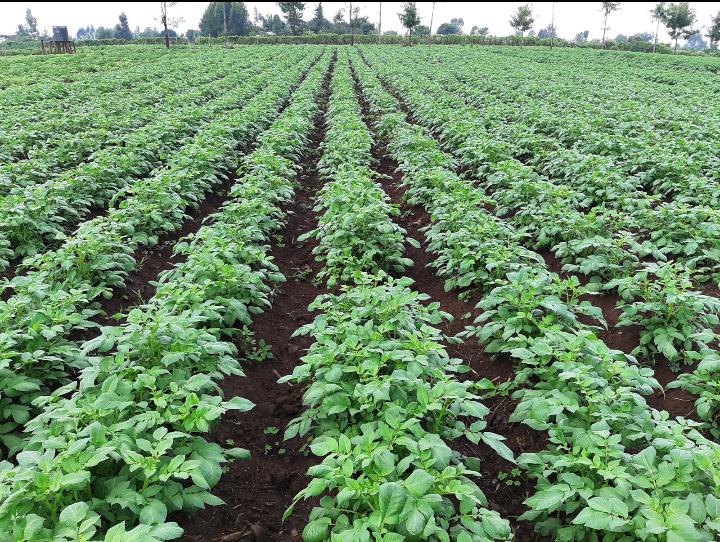
KEPHIS-certified Shangi & Markies seed, precision inputs, and rigorous soil pathogen screening engineered for 21.0–28.5 tons per acre.
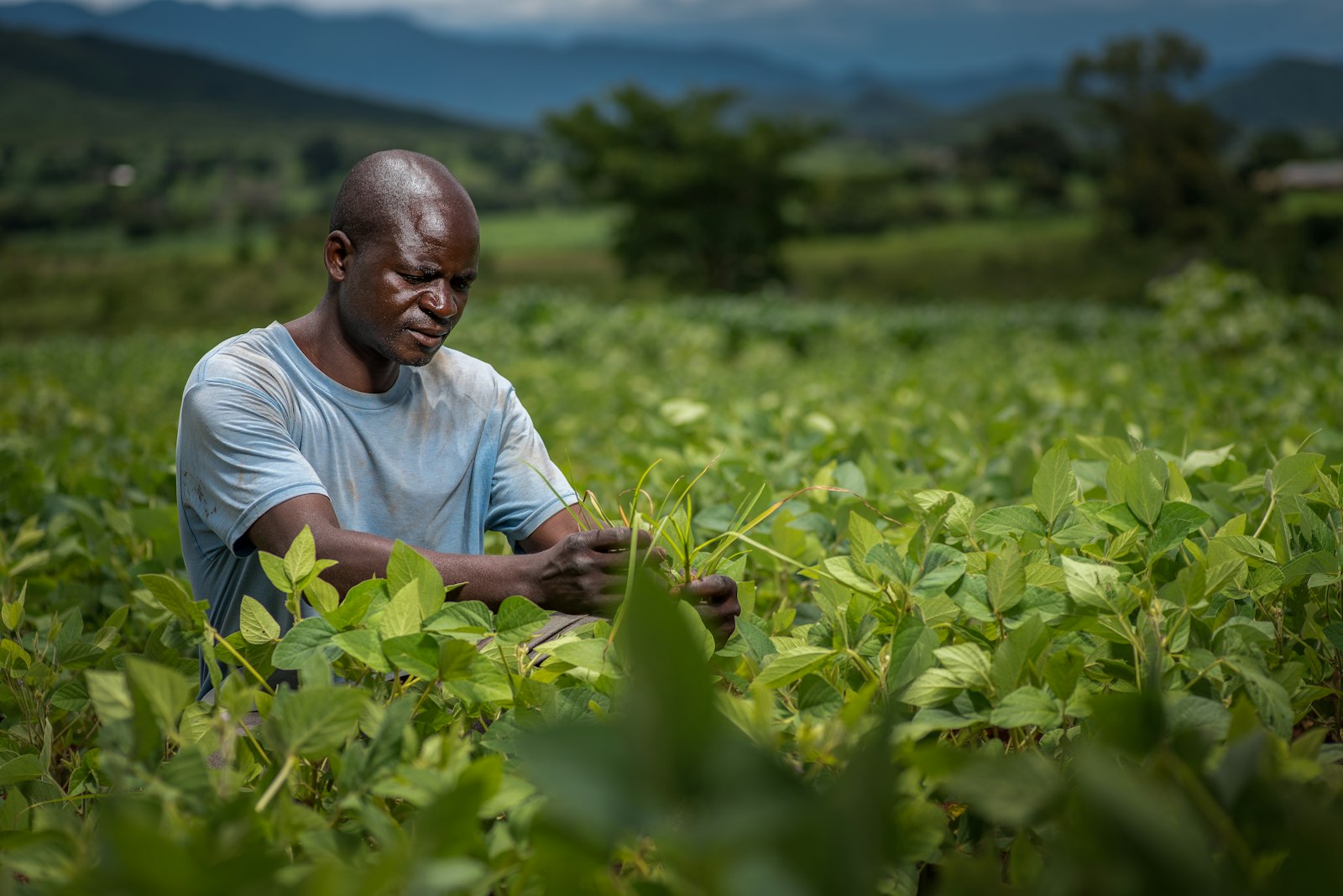
Thirty resident Graduate Employer-Shareholders enforce GAPs, food safety, and one-step-backward traceability across every acre.
Six controlled stages, every one auditable. Nothing on a UMO field happens by accident — it happens by sequence, by signature, by standard.
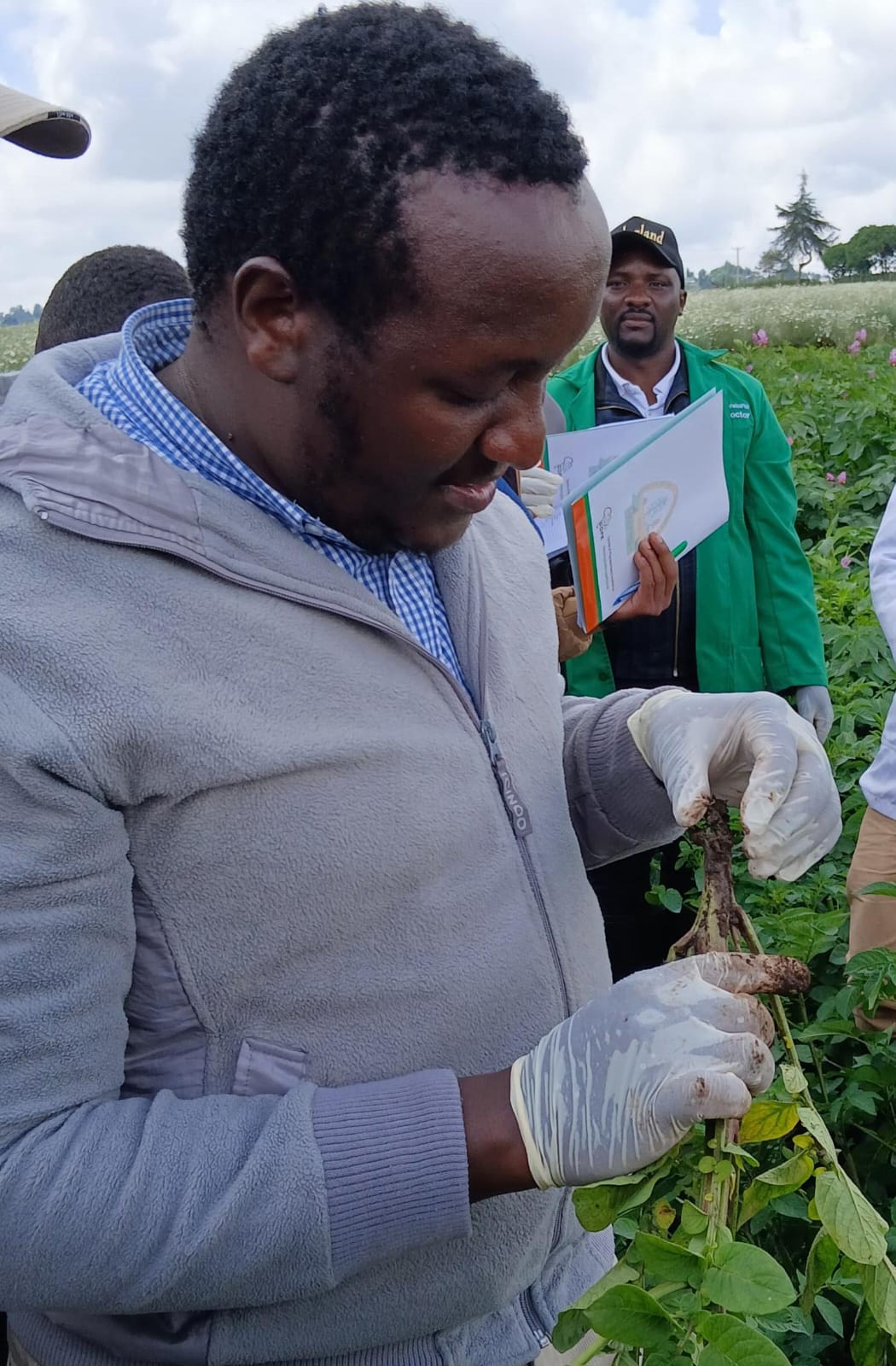
Scouting diseases in Narok — at a training organized by KEPHIS.
Meru parcels above 2,100m surveyed for elevation, drainage, and historical land use.
Mandatory soil testing for Bacterial Wilt and Potato Cyst Nematode against KEPHIS protocols before any commitment.
Long-term leases aggregate fragmented plots into Economic Production Units.
KEPHIS-certified G3 Shangi & Markies seed, precision fertigation, and IPM protocols.
Resident agronomists enforce GAPs and food safety across every operation.
Grade A to hospitality and export. Grade B to industrial and energy conversion.
Every dispatched lot carries a digital passport — origin parcel, variety, steward signature, screening results, harvest date, and destination. The credential premium markets demand.
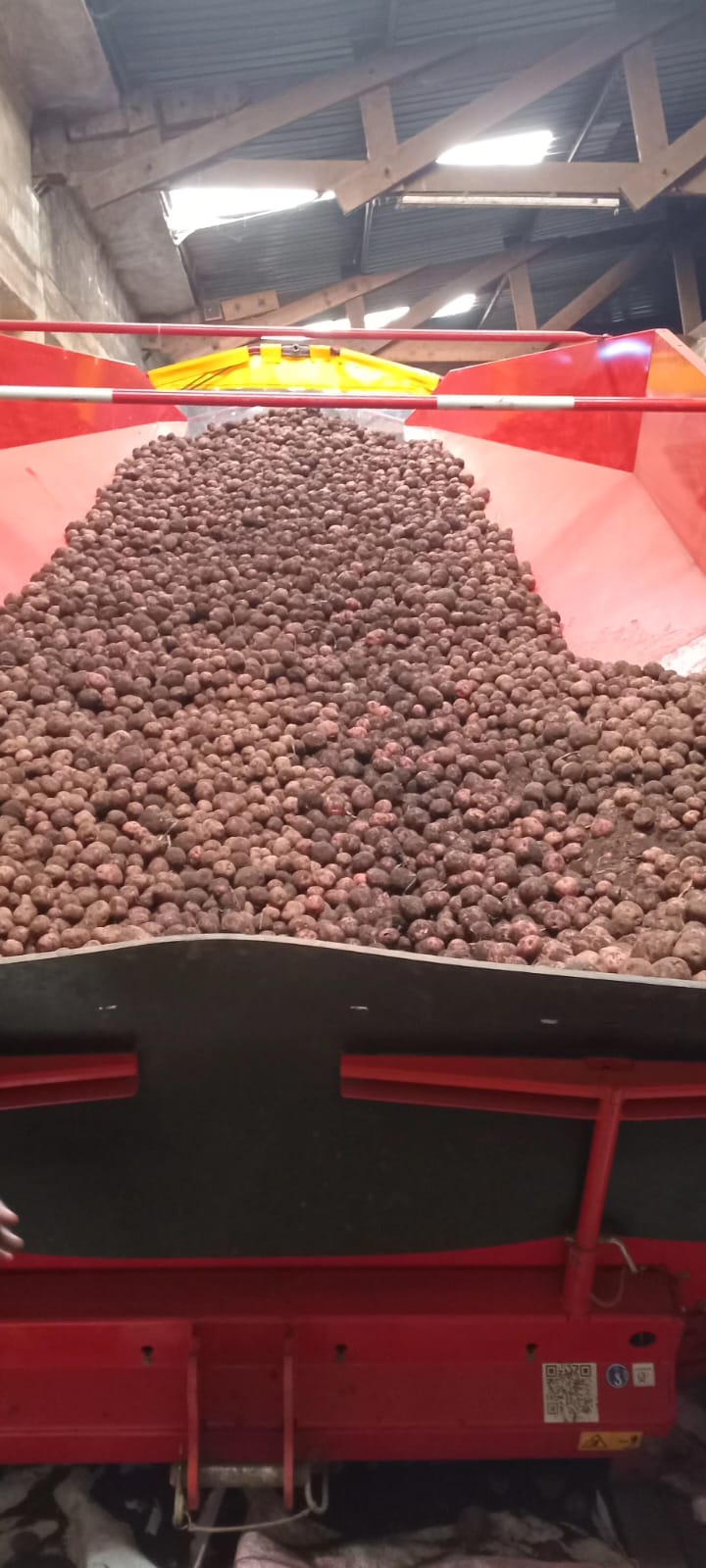
Kilimo bora. Mizizi ya viwanda.
We are not buying potatoes. We are building a value chain — from soil pathogen screening to a hospitality plate, every tuber carries a traceability passport, every acre carries a graduate's signature.
Every unit screened for Bacterial Wilt and Potato Cyst Nematode before a single seed is planted.
Site-specific management and graduate oversight protect produce integrity end-to-end.
Full traceability passports unlock premium hospitality and export market access.
A two-tier grading system extracts full economic value from 100% of our biological output — nothing leaves the field unaccounted for.
High-diameter tubers meeting the most stringent quality specifications — destined for premium hotels, restaurants, and international markets.
Smaller tubers diverted to industrial processing and energy conversion streams — ensuring zero biological loss across the harvest.
Premium hotels, lodges, and high-volume kitchens across Nairobi, Mombasa, and the wider East African corridor — Sarova, Serena, and Fairmont-tier estates.
Compliant supply for Gulf and European import channels — AFA-registered, passport-grade traceability built in.
Grade B feedstock to processors and energy converters — recovering full value from sub-spec output.
A staged, capital-efficient build-out — designed so each phase self-funds the next.
Consolidate first wave of EPUs, deploy graduate stewards, validate yield ceiling on Shangi & Markies.
Lock hospitality contracts, formalize Grade B feedstock off-take, commission cold-chain handling.
GLOBALG.A.P. accreditation, Gulf and EU channel onboarding, branded export packaging line.
Apply the EPU + steward model across additional high-altitude corridors in East Africa.
An EPU is a consolidated block of leased land — typically aggregating multiple smallholder plots — managed as a single industrial-scale operation under a UMO graduate steward. This is the foundation of our productivity moat.
Three controls: KEPHIS-certified G2/G3 seed of Shangi and Markies, mandatory pre-plant soil pathogen screening (Bacterial Wilt, PCN), and precision input regimes managed by a resident agronomist. We do not plant a single tuber on unscreened ground.
Thirty resident Graduate Employer-Shareholders — each holding a stake in the venture — are accountable for GAP adherence, daily field operations, and traceability records on assigned EPUs.
Standard farms discard or under-price sub-spec tubers. Our two-tier system pre-commits Grade A to hospitality/export and Grade B to industrial feedstock and energy conversion — guaranteeing a buyer for 100% of biological output.
Three: (1) Meru landowners entering long-term lease arrangements, (2) institutional investors backing EPU expansion, and (3) hospitality and export buyers seeking traceable, consistent supply.
Every acre carries a graduate's signature — so does the company itself. Three principals, credentialed, named, and reachable.
BSc Agriculture
BBA — Information Technology
BA Education

We work with hospitality buyers, export channels, institutional investors, and Meru landowners ready to enter long-term lease arrangements.
Kennedy Mutuma · C.E.O. · Lead Agronomist